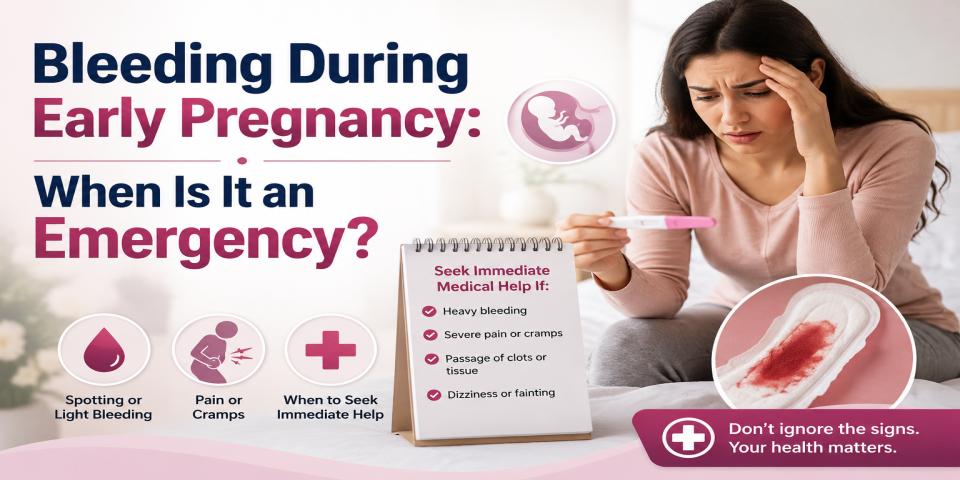
Bleeding During Early Pregnancy: When Is It an Emergency?
Seeing blood during pregnancy is frightening, even if it’s just a few drops. The good news is that bleeding during early pregnancy is common, and it doesn’t always mean something is wrong.
Studies suggest close to one in four women notice some bleeding in the first trimester, and many of them go on to have healthy pregnancies. Still, a smaller number of cases point to something that needs urgent care. This guide explains how to tell the difference so you know when to rest and watch and when to head straight to a hospital.
Spotting vs Bleeding: How to Tell the Difference?
Not all bleeding looks the same, and the amount matters more than most people realise.
Spotting is light. You might notice a few pink, red, or brown drops on your underwear or when you wipe, and it usually doesn’t fill a panty liner.
Bleeding is heavier. It soaks a liner or pad and may come with clots rather than the odd drop.
Either way, it’s worth telling your doctor, even if it feels minor. The NHS advises contacting a midwife or doctor about any vaginal bleeding in pregnancy, and heavy bleeding with pain needs faster attention than light spotting.
Common, Non-Serious Causes of Early Bleeding:
Many causes of bleeding during early pregnancy are not dangerous, even though they can still feel alarming in the moment.
Implantation bleeding: Spotting that occurs when the embryo implants itself on the wall of the uterus, usually around the time your period would have been due.
Hormonal shifts: Rising pregnancy hormones can cause occasional light spotting on their own.
Cervical sensitivity: The cervix gets extra blood flow in pregnancy, so sex, a pelvic exam, or an ultrasound can trigger a bit of spotting afterwards.
Cervical polyps: Small, usually harmless growths on the cervix that can bleed more easily due to higher estrogen levels.
None of these need emergency treatment on their own. Your doctor may still want to check you over just to be safe.
Causes That Need Urgent Attention:
Some causes of bleeding during early pregnancy are more serious and need prompt medical care. Guidance from the American College of Obstetricians and Gynecologists groups these conditions as ones that should prompt a same-day call to your provider.
Ectopic pregnancy: When the pregnancy implants outside the uterus, often in a fallopian tube. This can be life-threatening if the tube ruptures and needs immediate treatment.
Miscarriage: Loss of the pregnancy, usually before 12 to 20 weeks. Bleeding often starts light and gets heavier, frequently with cramping.
Molar pregnancy: A rare condition where tissue grows abnormally in the uterus instead of a typical pregnancy.
Infection: Some infections of the reproductive or urinary tract can cause bleeding and need antibiotic treatment.
Go to the nearest hospital emergency department if you notice any of these:
Heavy bleeding, such as soaking a pad every hour or passing large clots
Severe abdominal or shoulder-tip pain
Dizziness, fainting, or feeling like you might pass out
Fever or chills
Foul-smelling vaginal discharge
Ectopic Pregnancy vs Miscarriage vs Implantation Bleeding:
These three causes are often confused early on, since all three can start with spotting or light bleeding.
If you’re ever unsure which of these you’re dealing with, treat it as urgent and get checked rather than waiting it out.
What Tests Confirm the Cause of Bleeding?
Your doctor can’t always tell the cause of bleeding from symptoms alone, so a few tests usually follow.
Pelvic or vaginal examination: Checks the size of the uterus and where the bleeding is coming from.
Blood tests: Measures pregnancy hormone (beta-hCG) levels and checks your blood type.
Ultrasound scan: Confirms the pregnancy’s location, checks for a heartbeat, and rules out ectopic pregnancy.
An early ultrasound is often the single most useful test, since it can usually confirm whether the pregnancy is inside the uterus and developing as expected.
How to Care for Yourself While You Wait for Answers?
While you wait for test results or a scan appointment, a few simple steps can help you manage bleeding during early pregnancy safely at home.
Rest and avoid strenuous activity or heavy lifting.
Use a pad rather than a tampon to track how much you’re bleeding.
Avoid sex until you’ve been checked, and the bleeding has settled.
Note the colour, amount, and any clots or tissue.
Take paracetamol for mild discomfort if needed, unless your doctor has advised otherwise.
If bleeding suddenly gets heavier, or new symptoms like pain, fever, or dizziness appear, don’t wait it out at home. Head to the hospital instead.
When to Book a Consultation Instead of Waiting?
If your bleeding is light and you have no pain, fever, or dizziness, it’s still worth booking a consultation rather than simply waiting for it to stop on its own. A gynecologist can examine you, order the right blood tests, and decide whether a scan is even needed yet, since timing a scan too early can miss the very things it’s meant to check. This matters more if you’ve had a previous ectopic pregnancy, are carrying twins, or conceived through fertility treatment, since these situations carry a higher chance of complications and benefit from a doctor managing the full picture rather than a scan result alone.
How Dr. Asmita Dongare Can Help You Get Answers Fast?
If you’re in Wakad, Baner, or nearby parts of Pune and experiencing bleeding during early pregnancy, Dr Asmita Dongare offers same-day evaluation for exactly this kind of concern. With over 18 years of experience in obstetrics and gynaecology, including specific expertise in ectopic pregnancy and high-risk pregnancy, she is well placed to assess bleeding quickly and clearly. The clinic operates from Cloverleaf Speciality Clinic in Wakad and Jupiter Hospital in Baner, both equipped to perform urgent scans and blood tests on the spot. If your bleeding turns out to need ongoing monitoring, the team can also guide you through antenatal care for the rest of your pregnancy.
Conclusion:
Bleeding during early pregnancy is common, and most of the time it isn’t an emergency. Light spotting without pain or fever is usually safe to monitor and mention at your next visit. Heavy bleeding, severe pain, shoulder-tip pain, fever, or dizziness are different. Those signs mean it’s time to get checked immediately, not wait and see. If you’re facing bleeding during early pregnancy and aren’t sure which category you fall into, reach out to Dr. Asmita Dongare’s clinic for a same-day assessment rather than guessing at home.
If you have heavy bleeding, severe pain, fever, or dizziness, go to the ER immediately rather than waiting. For light spotting with no other symptoms, a same-day clinic visit is usually fine.
Not always, but it’s the most reliable way to find out where the pregnancy is and how it’s developing, so most doctors recommend one after any bleeding during early pregnancy.
There’s no strong evidence that everyday stress or light exercise causes bleeding on its own. Bleeding after intercourse or a pelvic exam is more commonly linked to cervical sensitivity.If you’re currently going through unexplained bleeding or a possible pregnancy loss, please know that support is available beyond what a blog post can offer. Speaking with your doctor as soon as possible remains the safest next step.